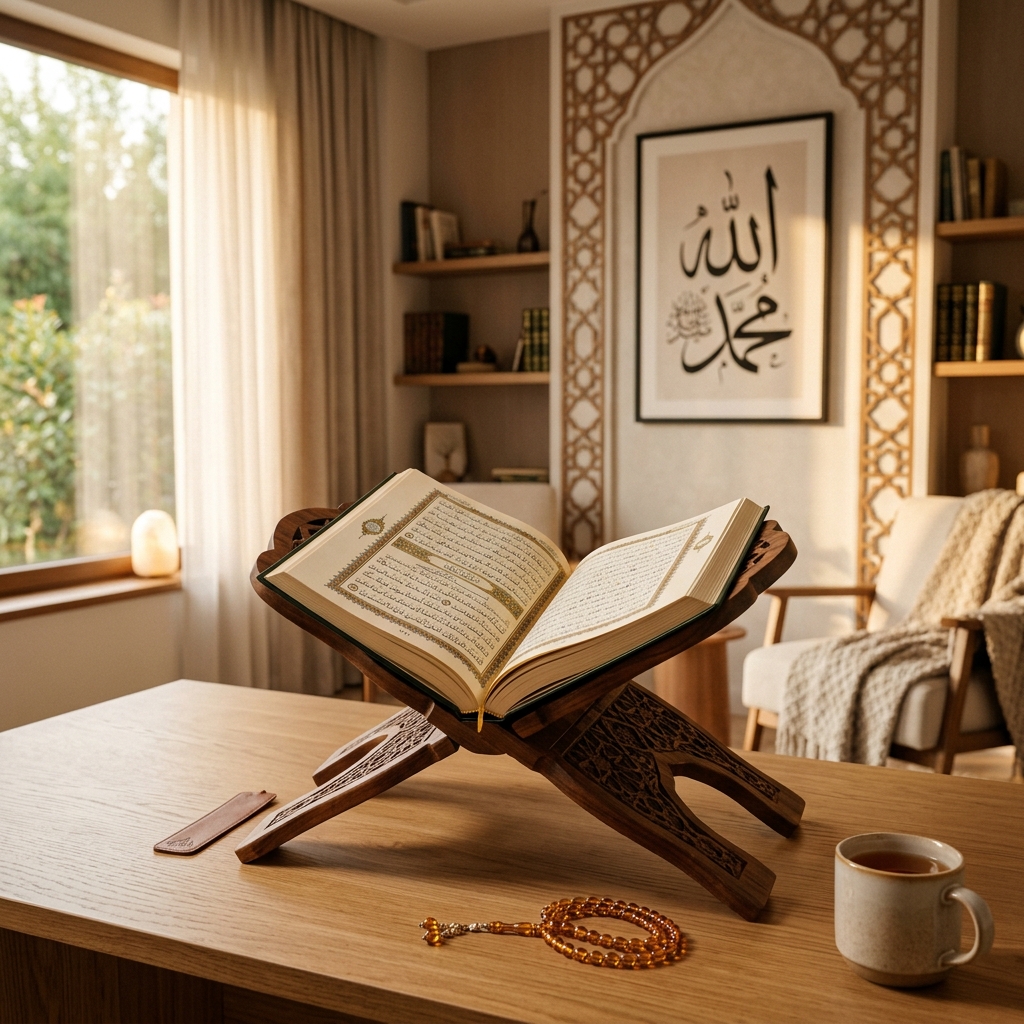
How to Learn Tajweed at Home: A Complete Beginner's Guide
Reciting the Holy Quran with its proper rules and correct pronunciation is an obligation and a beautiful way of showing respect to the words of Allah (SWT). This set of rules is called Tajweed. Many beginners feel overwhelmed when starting, but learning Tajweed does not have to be difficult. Today, modern tools have made it incredibly easy to learn Tajweed at home. In this comprehensive guide, we will break down a step-by-step path to help you master Tajweed rules effectively.
1. Master the Arabic Alphabets and Pronunciation Points (Makharij)
The foundation of Tajweed is the correct pronunciation of Arabic letters. Every Arabic letter has a specific point in the mouth or throat from where its sound originates, known as the Makhraj (plural: Makharij). As a beginner:
- Focus on letters that sound similar to English but have distinct differences (e.g., distinguishing between 'Ha' (ح) and 'Kha' (خ), or 'Suaad' (ص) and 'Seen' (س)).
- Practice breathing techniques to project heavy and light letters correctly.
- Use visual charts to understand the parts of the throat and mouth used for articulation.
2. Learn the Core Rules of Tajweed
Once you can pronounce individual letters correctly, the next step in this Tajweed rules guide is learning how letters interact with each other. The core rules you should start with include:
- Noon Sakinah and Tanween: Rules detailing how to pronounce a silent Noon or double vowels (Izhaar, Idghaam, Iqlaab, and Ikhfaa).
- Meem Sakinah: Rules for pronouncing a silent Meem (Ikhfaa Shafawi, Idghaam Shafawi, and Izhaar Shafawi).
- Madd Rules: Rules of elongation, which determine when and how long to stretch certain vowel sounds.
3. Listen to Professional Reciters (Qurra)
Imitation is an extremely powerful learning tool. Listen carefully to well-known Quran reciters famous for their slow, precise Tajweed recitation. Reciters like Sheikh Mahmoud Khalil Al-Husary are highly recommended for beginners. Listen to a verse, pause the audio, and try to replicate the exact sound, rhythm, and length of elongation at home.
4. Enroll in Tajweed Classes at an Online Quran Academy
While self-study through books and videos is a great starting point, Tajweed cannot be perfected without live feedback. A book or pre-recorded video cannot correct you when you make a mistake. To truly master recitation, you need to learn Tajweed online with a qualified Quran teacher who can listen to your recitation and correct your pronunciation in real-time. Joining an established online Quran academy like TajweedHub allows you to take structured Tajweed classes from the comfort of your home, with schedules tailored to your lifestyle.
Tips for Success for Beginners
"The one who recites the Quran beautifully, smoothly, and precisely, will be in the company of the noble and obedient angels..."
(Sahih Al-Bukhari)
- Be Patient: Getting the throat muscles used to Arabic sounds takes time. Do not rush.
- Practice Daily: Even 15 minutes of daily practice is better than a 2-hour session once a week.
- Make Dua: Ask Allah (SWT) to make the journey easy for you.
Conclusion: Learning Tajweed at home is a highly spiritual, rewarding, and achievable goal. By following these steps and staying consistent, you will quickly notice a massive improvement in your Quran recitation. Are you ready to take the next step? Connect with a professional male or female Quran tutor at TajweedHub. Book your free trial Tajweed class today!